AI automation that is reliable, not gimmicky.
AI can remove a lot of repetitive work, but only if it is integrated into real workflows and monitored like any other system. I build AI features and automations with guardrails, human approval, and clear ownership.

What this includes.
Practical automation that fits your workflow, keeps people in the loop, and stays reliable over time.
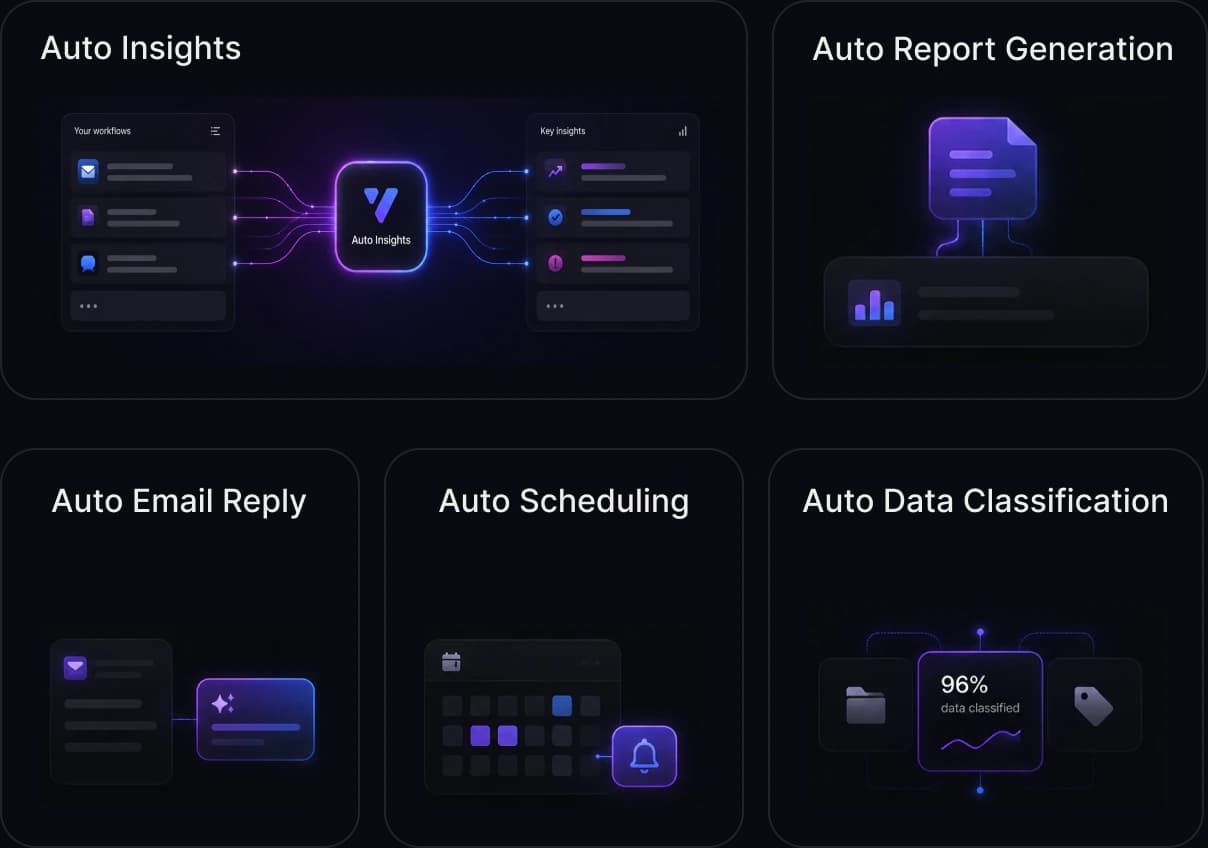
AI assistants for internal knowledge
Search, Q&A, and summaries across docs, tickets, and internal notes so teams find answers fast.

Ticket and inbox triage
Classify, route, and draft replies so teams can focus on the highest impact work.

Document processing
Extract fields, validate them, and sync structured data into your systems.

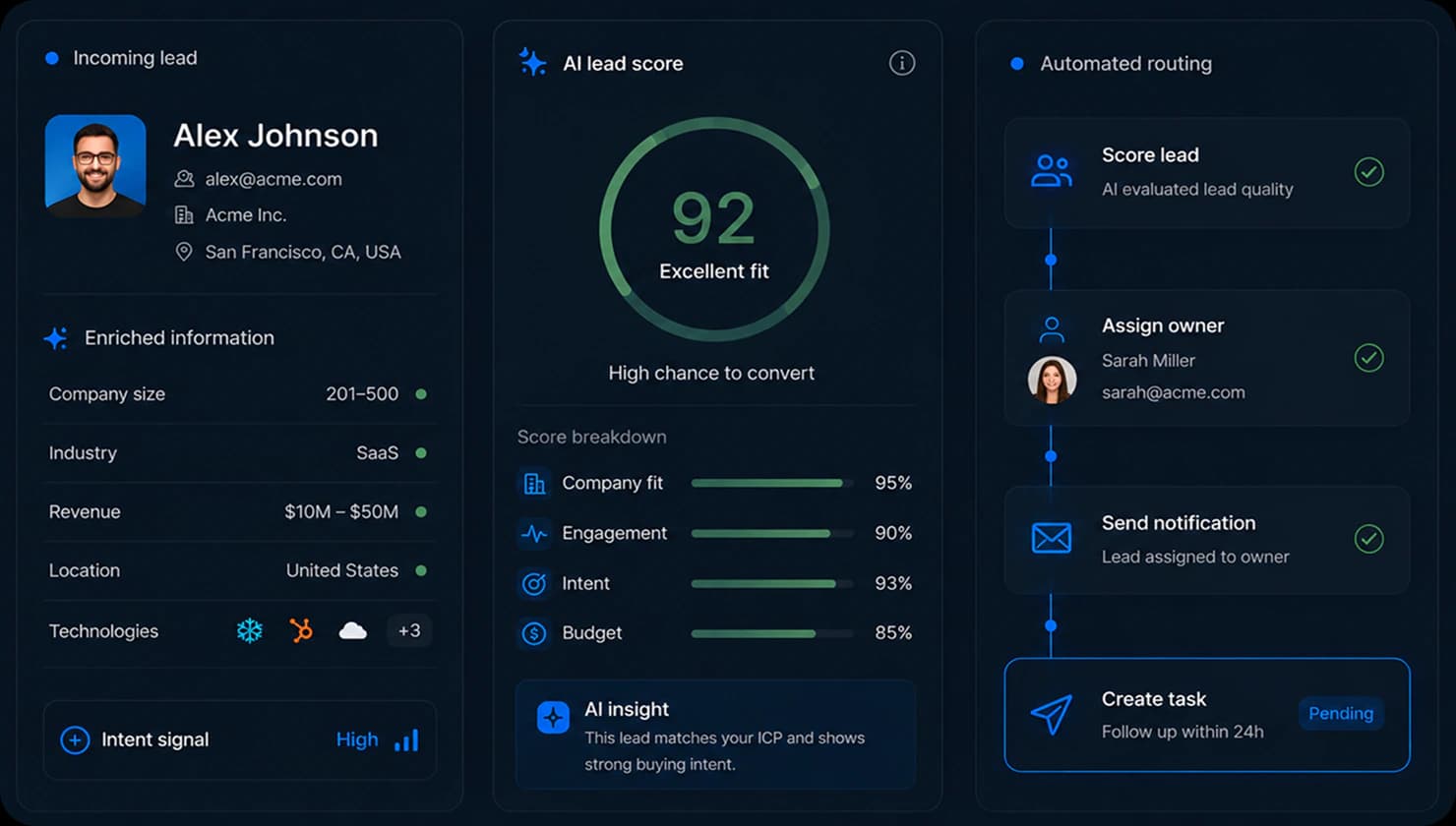
Lead enrichment and qualification
Enrich leads with public data and apply clear qualification rules before handoff.

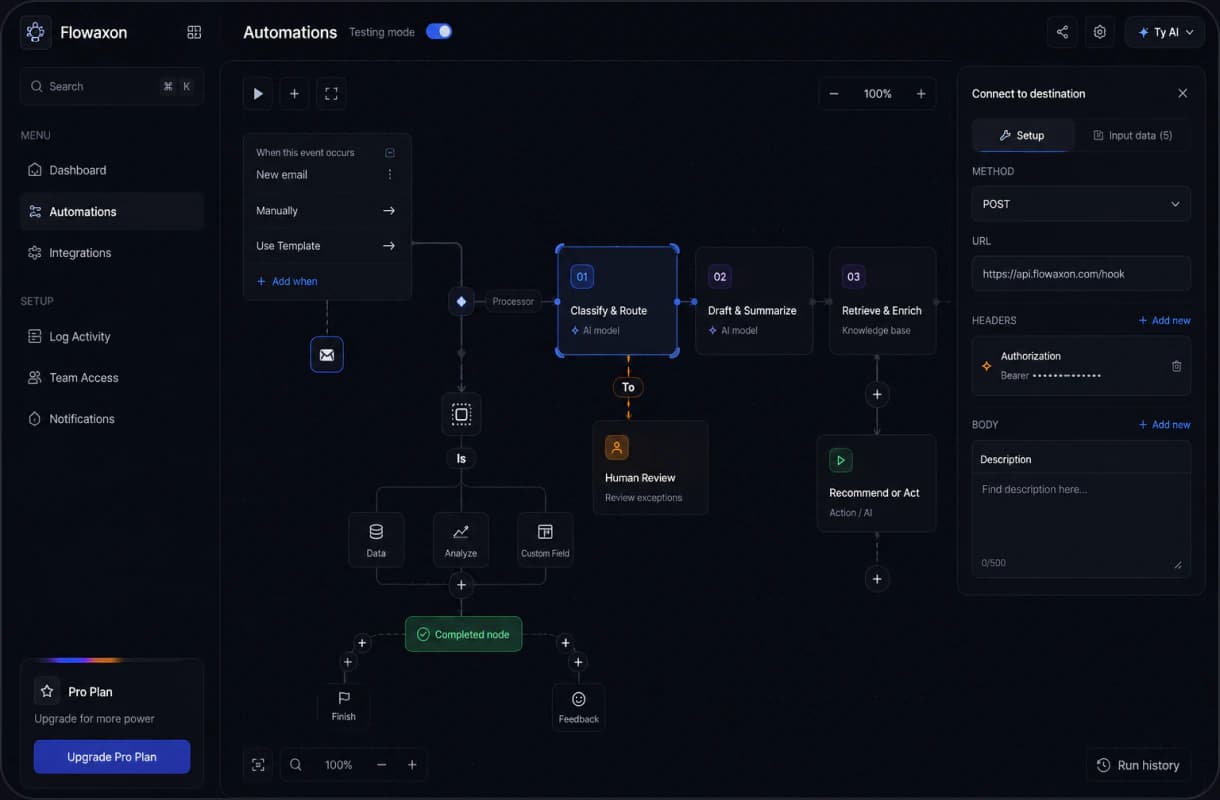
Automations across tools
Connect CRM, Slack, email, and databases so information flows without copy-paste.

Ready to automate one workflow
Share a repetitive process and where the data lives. I will propose a safe, measurable automation plan.
Guardrails and safety built in.
Automation only helps if it is safe to trust. Every build includes controls that protect your data, your team, and your customers.

Safeguards that keep AI dependable
Clear boundaries so automation stays predictable and measurable.
Human-in-the-loop approvals
High-risk actions pause for review before anything is executed.
Clear prompts and policies
Defined constraints, roles, and guardrails so the system stays predictable.
Logging and evaluation
Track outputs, quality, and regressions so performance stays stable.
Rate limits and cost controls
Keep spend predictable and prevent runaway usage.
Privacy-first data handling
Data minimization, access control, and EU-ready practices where needed.
Rollback and recovery
Versioned prompts and quick rollback paths if output quality drops.
How we ship AI responsibly.
A structured process that keeps automation reliable, measurable, and safe to adopt.
What this process protects
Define the workflow
Scope and risk
We map the workflow and decision points so automation fits real handoffs.

Want a safe automation plan
Share your workflow and constraints. I will outline the smallest reliable automation that creates leverage.
Safety controls and governance.
Practical AI automation needs more than a model. These controls keep quality stable, costs predictable, and ownership clear.
Controls you can see
Transparency and accountability for every workflow.
Privacy and data handling
Protect sensitive data while keeping workflows useful.
Approvals and auditability
Clear accountability for high-impact actions.
Build automation you can trust
I will design the approvals, logging, and safety controls that make AI safe to use in real operations.
From workflow to reliable automation.
A structured process that keeps AI automation safe, measurable, and aligned to your operations.
Define the workflow
Step 1Map the process, clarify ownership, and decide what AI should and should not do.
Choose the right approach
Step 2Use rules where possible, AI only where it adds real value, and pick the safest model path.
Build and test
Step 3Ship integrations, approvals, and evaluation so quality is measurable before rollout.
Rollout and train
Step 4Launch gradually, train the team, and keep improving with feedback loops.
AI automation investment.
Start with a focused pilot or keep me on as a monthly partner. Both options include guardrails, approvals, and monitoring so quality stays stable.
Fixed-scope builds
Best for a well-defined dashboard, internal tool, or integration project with a clear deliverable.
- ✓Clear scope, milestones, and timeline
- ✓Fixed deliverables and ownership
- ✓Built to be maintained and extended
- ✓Roadmap aligned to your workflow
- ✓Delivery with monitoring and handover
Monthly systems partner
Best for teams that want ongoing improvements, automations, and iteration without new contracts each time.
- ✓Prioritized queue of requests
- ✓Weekly delivery and async collaboration
- ✓Continuous improvement and monitoring
- ✓Transparent backlog and scope control
- ✓One flat monthly fee
AI automation FAQ.
Common questions about safe AI automation, approvals, and ownership. Don't see your question? Share your workflow and I will help.
A focused automation can ship in a few weeks if the workflow and data are clear. Larger systems depend on the number of integrations, approval steps, and evaluation needs. After a short discovery, you get a clear plan and timeline.
Workflow mapping, integration setup, prompt and policy design, approvals, monitoring, and a rollout plan. The goal is a reliable automation with clear ownership, not a demo that breaks in real use.
We define success metrics early, test against real examples, and monitor output quality after launch. For high-risk actions, we keep a human approval step so results stay reliable.
Yes. We use data minimization, redaction, and access control. If needed, we keep sensitive fields out of the AI context and route them through secure systems instead.
Yes. We add approval steps for high-impact actions and keep a full audit trail so your team can review what happened and why.
We set rate limits, monitor usage, and define caps per workflow. You see what is running, what it costs, and when to adjust.
Automation moves work through a defined workflow with clear inputs and outputs. An AI assistant is usually a front-end to that workflow. We decide which pattern fits your team and where human review is required.
You get clear ownership guidance for prompts, approvals, and incident handling. I can stay on for monitoring and iteration, or hand over with playbooks your team can run.
We start with one high-friction workflow, examples of real inputs and outputs, and a person responsible for approval policy. This keeps the first release safe and useful.
Want to automate a workflow without breaking trust.
Share one repetitive process and where the data lives. I will propose an automation that is safe, measurable, and maintainable.